
This gallery contains 1 photo.
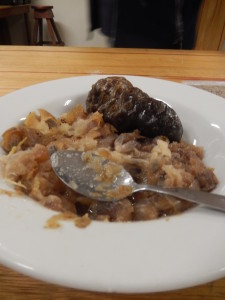
I’ve really been enjoying eating Gallo Pinto, seriously. And papaya fresca here makes me sad because I know I won’t get this kind of food when I return.
This gallery contains 1 photo.
I’ve really been enjoying eating Gallo Pinto, seriously. And papaya fresca here makes me sad because I know I won’t get this kind of food when I return.
Costa Rica is a model of conservation only because its ecology was so completely ruined in the 20th century by the presence of industrialize agriculture. Costa Rica is one of the original “Banana Republics”. The United Fruit Company is the major influence in Costa Rica, and was also indirectly responsible for CIA activity in Nicaragua and Honduras.
But this entry is not about the influence of corporate America on foreign policy. There is a cycle of exploitation by these companies that creates a “double punch” to old growth forests. Small family farms clear a small area of forest that provide just enough for the families and their living. Foreign companies clear vast areas of forest and buy the land of peasants in order to grow their product, which is usually a single agricultural product. The peasants are then forced to become landless laborers on these plantations until the land loses its production value. These laborers then set up new farms by clearing more old growth forest, usually by burning, and the cycle begins again. Cattle ranching is not usually influenced by foreign companies but the growing demand globally for beef often encourages the expansion of cattle pasture.
According to my primary source, “Breakfast of Biodiversity”, the current world economic system is the primary cause of both deforestation and the underdeveloped nature of the Global South(umbrella term for 3rd world countries which do mostly exist in the south of the globe). The WTO and IMF are both factors in the continuing conditions and often rule in favor of 1st world interests.
I’d like to hear comments and suggestions for questions and ideas I could forward to my classmates and professors by the readers of this journal.
https://www.flickr.com/photos/alephrocco/sets/
Go to the Costa Rica Tab and check out nearly 200 photos of rain forest insects by the man dedicated to catching every moving thing with leathery wings that emerged from a pupa.
(Disclaimer: many animals are in fact in his hand, but any photo of animals with stingers or of snakes were handled by Mauricio, our Tico professor.)
B. Constrictor was found on a private farm, not at La Cruces, it hissed loudly. Ctenidae is the famous “Wandering Spider” family. Urban photo on page 2 is from roof of our hotel in San Jose.