It’s a Trap! Ecological Traps

When an environment is changed, I am able to respond, or change my behavior to that change accordingly. However, some behaviors are that are important for an animal can lead them into a trap. I will use the classic example: The sea turtle. Sea Jellies are an important part of its diet, and the sea turtle has learned to identify shiny round objects in the ocean as food. It often mistakes plastic bags for Jellies and chokes.

Ecological Traps are anthropogenic(human) changes in the environment that interfere with animal behavior. The cue for the behavior is now changed in the environment. Strange as it may be, but my classmates just found a YouTube video with 4.5 million views and is a perfect example of a mate selection trap: A turtle trying to copulate with a Croc(TM). Yes, the plastic sandal. This is bad, not funny! The turtle is not aware that the object is a sandal, all it sees is a dull brown object its size and assumes it is another turtle. This sounds ridiculous, but is common for animals and insects.

The best way to avoid these traps is to be aware of them and reduce them where-ever possible. Even management can fail however. An attempt to increase local duck populations in Minnesota by installing duck boxes(nests) crashed the population. This duck species is a brood parasite. It lays its eggs in another nest to force others to raise it. Normally the ducks hide, however, this season the nests were obviously in boxes and eggs were laid in huge numbers.

I am sorry to say even humans are subject to ecological traps. We have a physiology that loves salts and fats. These things were important to survive, they were extra energy during periods of famine. These periods were thousands of years ago. In today’s society we have surplus foods but the same cravings our ancestors did for fats and salts, so we keep eating although the environment has changed.

Summary of Biodiversity-Part 2

These recent posts are because I want to be thinking about these topics for my two exams in the morning. I begin here with part two because part one was in February. It was called “Causes of biodiversity”.
This post will focus on the “Maintenance of Biodiversity” or “Como mantener densidad?”

How do we quantify diversity? In fact biologists cannot exactly agree on this question either. There are plenty of formulas for species density and proportion and all of them function, yet some of them are better for particular questions than others. The Shannon index for example accounts for plants and animals in a habitat and returns a numerical value. However, this number means nothing by itself. It must be used as a comparison between the same habitat over time or between two or more different habitats.

The scale of diversity is also a question that must be considered. Do we look at the diversity of species in a habitat? This habitat can be the amazon basin or lake chabot regional park and these would both be alpha diversity. Gamma diversity would be looking at an entire geographic region, such as an old growth forest to a secondary forest to grassland in which species can pass between the habitats without traversing difficult barriers. Beta diversity measures how species compositions change between two habitats, such as a forest and grassland. Gamma encompasses Betas and alphas, and Beta compares two alphas.

Now that I have hopefully shown that this is can get complicated, I will try to explain the ideas people have come up with to explain how one species does not simply take over and drive the others to extinction. In fact, this is called the competitive exclusion principle. If two organisms are placed in a controlled environment and compete for the same resource, one of them will ultimately out compete and “exclude” the other. However, it is built upon five primary principles which are refuted by these hypotheses.

Species exist in an ecosystem in a niche, or ecological role. They include predation, eating leaves, getting sunlight by being the largest tree, or being shade tolerant and living in the understory of a forest. Even predation can be diverse. There is a species of insectivorous bird for eating insects where ever they find them, but also birds that specialize in eating insects from the ground, from mid-story branches, from canopy leaves, etc. These specialized species will be better at their roles than generalists, which keep the generalists from being numerous. Bird foraging can be restricted to different parts of a single tree! The number of niches can increase as resources increase and diversify and as specialization increases. This is called “Niche Diversification”.

Compensatory Mortality states that species will compete and exhaust each other, and rare species are actually favored in an environment.

The Dispersal limitation hypothesis is related to the ability of trees and shrubs to produce successful seedlings. The further away the seed is from the parent tree, the lower its mortality will be.There is a phenomenon called the “seed shadow” which is the first three to five meters from the parent tree. Only in the tropics will mortality be 100% if the seed lands within the seed shadow. This decrease species density. Your species will not be immediately next to you but 20 other species of tree, shrub, or low growing palm will root around you. Diversity is maintained because a single tree cannot establish a monogrowth in the forest.

This concludes the equilibrium theories, where things don’t really change. Non-equilibium explanations depend on changing conditions such as time and space in the maintenance of biodiversity. They are:

Intermediate Disturbance hypothesis: Diversity is highest in an environment that is disturbed frequently. Disturbances are tree fall gaps, landslides, floods. In the temperate zone they can include forest fires. These disturbances are events that allow species that specialize in growing fast in these sunny environments. This allows for species that do well in sunny places and the understory to thrive.

Stochastic Process: Time is very important for this idea. Imagine that all species are after the sames resources. All Species! Exclusion is happening, however, new species are being formed to compete as well. Therefore, speciation is happening at the same rate as extinctions.

Unified Neutral Theory: All species are considered equal. All species, regardless of class or domain are the same and compete for the same resources and are equally effective at competing for those resources. That they are all after the same resources and are equally competitive for them this means that they will never out-compete each other, and species are balanced.
This is a weird one, yet I am told it is in fact an excellent theory to explain many phenomenon in the natural world…

These are only some of the ideas behind what keeps biodiversity going. Most likely some combination of all of these are the whole picture. There are many ideas on what generate biodiversity, and they really work best when combined together. Biodiversity is complicated, like most concepts relating to the natural world, and new ideas are proposed all the time to help add one piece of this puzzle together.
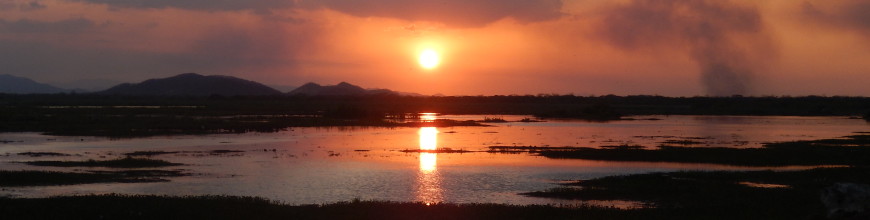
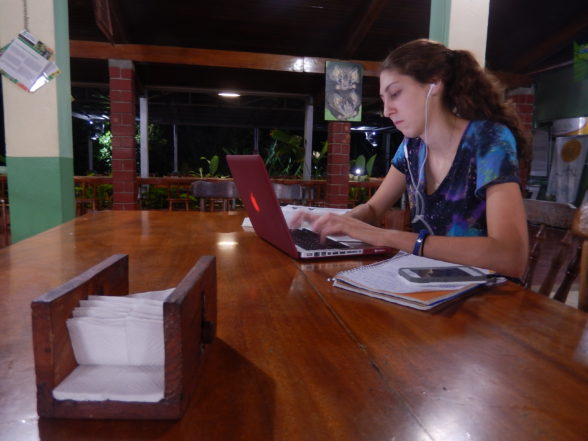
Coral Reef Restoration Ecology and controlling life itself

The coral reef is in fact only a portion of the total environment in the tropical ocean. It really begins with the mangrove forest. Trees that have evolved adaptations to high salinity content and partial submersion. Aquatic organisms often begin here as larvae and migrate through the sea grass beds and finally to the coral reefs. Even of these three environments, not counting the deep sea, there exist endemic species. This is called beta diversity.

Back to coral reefs…

The primary threats to coral reefs are thermal pollution, over fishing, and disease. All of these factors cause coral and fish decline. Why should people care about this? In fact, many coral reefs are connected to fish populations that are harvested for human consumption and coral reefs are responsible for the same amount of carbon sequestration(airborne carbon going into the ground) as temperate forests.

To restore the coral reefs require knowing its ecological processes. Coral have preferences for density, sunlight, and temperature. They begin life as microscopic larvae(think sea jelly) and attach to rock substrate where they will spend the rest of their lives. They compete with sponges, algae, and other coral for space like any forest, but are habitat for more sea life than algae.

Our visiting professor, Mark Ladd from UCSB, has studied how herbivory of algae by fish is likely the largest factor in maintaining reef biodiversity. Without herbivores algae are able to grow and out compete coral.

During this lecture, Mark has shown us a photo from 1955 in Cuba, where a thin man on vacation caught a 9 foot fish and posed with his family. Adjacent to this photo is one of today’s sports fishermen, who were at least 300 pounds each and whose trophy catches were 5 – 10 inches long. No science here, but an interesting observation on fishing. Fish have been getting smaller and humans larger?

So how does Mark restore coral reefs? In fact it is easy. Avoid spreading disease, solve rising sea temperatures and build an underwater coral plantation. Mark along with Coral Restoration Foundation (coralrestoration.org) has been growing endangered coral and using his studies on coral density and population preferences, has been regrowing coral in Florida and along the southern coast of the United States.

For this project the saying, “If you build it they will come” has been accurate. Reforesting the sea floor with coral allows sea organisms such as fish and urchins to repopulate them and restore the ecology of these reefs. And Marks research has also shown if corals live well adjacent to other corals or sponges, so he and the CRF know how to build a mosaic on the sea floor that will not obliterate itself.

However the same problems we began with exist for Mark’s corals. Since the construction of the Panama canal and regular international shipping, disease flows easily between the global oceans and threatens not to leave the 10 percent of an immune population. Warming temperatures raise the regularity and length of coral bleaching and allows invasive species to migrate.

Mark, at least, has chosen that to save the ocean ecosystem he must mold the reef in his own image, that is to say, learn which genotypes present in corals allow for disease immunity and thermal tolerance and breed them into his farm. He has done this with corals already and intends to continue on this path. It is a radical step, modifying life in your opinion of “right” or necessity. I wonder when we will begin to modify all of the forests to perform more efficient carbon sequestration or breed for drought tolerance in trees that had once lived in wet ecosystems.
We already breed and even genetically modify our crops and livestock and even ourselves to some extent. With the knowledge of biology and genetics, the whole world may one day be made not in God’s image, but for certain in Man’s.
There may even come days when genes themselves become patented property. I lied, they already have, and evolution becomes less of a natural phenomenon over eons, and more of an artificial one made over a few generations.

Ecotourism and its impacts on culture and economy

Santa Elena and Monteverde are two towns that are now connected to the international community by tourism. Hotels are numerous and “American” food is easy to find here. Theft is low because there are only two unpaved roads off the mountain community. Once there was a mugging but the local tour guides set up road blocks and the thieves were caught on their way out. They were taught a tough lesson by the locals.

This is your quintessential tourist town. Anyone you need to talk to speaks your language(mostly English or French), little artisan shop sell you hand crafted items and there are bars and restaurants. In fact we visited an artisan co-op in Monteverde that was run by local women. Money going directly to the women meant that families were more likely to be fed well and have decent standards of living. Next door was a coffee shop. Coffee is a big deal in Costa Rica, and this coffee was special, so I’m told.

The old Quaker factory produces wonderful ice cream. I tried fig and one other exotic fruit that I cannot remember. The production led to problems however. Cheese production has by-products such as whey. This was originally dumped into the watershed, which led to drops in aquatic organism populations. The solution was to feed this whey to a newly established pig farm which had its own problems. First was a smell that would blow into town, the second was mosquitoes growing from pig pens and waste treatment ponds. Mauricio was hired as an insect pest expert. He ventured out everyday to sample mosquito populations for two days until the community representative said to him, “We know their populations are exploding. they are investing the town, you need to stop them not survey them!”
Mauricio recommended a biological control agent, a commercial bacteria that attacks mosquito larvae. This has been their solution ever since.

Culture here has also been affected by tourism. Money flowing into a town that originally was so disconnected from its own country brings its own influences. They have a hospital with a helipad to transport emergency patients to larger hospitals. There is talk of building a real road into town yet qualities of a town are still bare such as a central government building, a quality library. A football field is on the edge of town and property is sold in “tourist prices” due to the desire for foreigners to settle in such a beautiful location.
Two different important topics of tourist towns in Costa Rica are sex and drugs. There is a bit of white worship going in these towns and the young hip tourists are well dresses, travel globally and smoke herb. The local kids look up to these ideals and try to emulate them. There is no problem finding marijuana, cocaine, ecstasy, and other narcotics in these towns, and all of them are criminal offenses under Costa Rican law.
These towns have bars and locals and tourist towns have tourists. Local men go out and pick up young, international women for a night and then often happen to pick up STDs, which they often spread to their wives.
These things happen everywhere of course, but for a small tourist town like Santa Elena, news travels fast and these things simply were not as prevalent twenty years ago.

And yet being aware of this issues never feels like being on the path to solving them. Perhaps for us, being aware is enough. Perhaps a change in the tourist’s behavior is necessary, for example, appreciation for local cultures and incorporating it into the ecotourism. Even local culture is complicated.
Mauricio gave us a story of a taxi driver who would run over snakes whenever he encountered them on the road. Since Santa Elena has become a tourist town, this driver received large tips for pulling over and petting the snakes he sees.
So I am happy that ecotourism has affected the old culture. People here used to not appreciate their forests and now it brings them an economy. And I am disappointed that hard drugs find their way to party towns and I am disappointed that people still do not insist on condoms for one-night-stands. The good and the bad of the world are mixed together in these communities, and the forests are protected and money flows.

Bosque Eterno de los ni(ny)os

Week of April 8th

The Monteverde region of Costa Rica has an elevation of 1000 meters to 1800 meters. Most of today’s preserve is situated on the Caribbean side of the continental divide. Its history begins in 1952, with the settlement of Quaker from the United States. They were a small community who kept themselves largely isolated from the local Costa Ricans. While the region itself is in fact, not very good for any kind of development due to the poor soil quality and swampy terrain that bred biting flies on the cows, milk production was successful under the Quakers. However, the roads from Monteverde to San Jose were of poor quality and transporting milk would be costly, so the Quakers shifted their production to cheese. They hired locals to work in the factory and Monteverde cheese became a high quality product throughout Costa Rica.

In 1971 a small forest preserve was established in the region. Two reasons for this were: the discovery of an endemic species of Golden Toad that exists in the elven forests of +1600 meters (this species was one of the first species to become extinct during the amphibian collapse in the 1980s) and 2. The discovery by George Powell on the importance of maintaining migratory sites for seasonal birds. Maintaining this preserve allowed birds to migrate from the Guanacaste lowlands to the mountains.

During the late 1970s to 1986 deforestation reached a high point in this region; in the Penas Blancas Valley squatters, poachers, and illegal farmers were prevalent in this region and tourism was not. In 1987 Sharon Kinsman of the USA meets with the Associacion Conservacion Monteverde(ACM). She was representing Swedish school children who had been to her talks on the forest and were working to raise money to buy the land. A hectare is 100 by 100 meters and costed 100$ during this period. The land was not worth much to begin with. The school children raised 2 million dollars over four years. With additional contributions and the “debt-for-nature” program the Monteverde Conservation League (a different organization from ACM) developed the BEN which encompasses 22500 hectares of old growth and secondary forest. This land is in addition to the original Monteverde Preserve and other pieces of private protected land.
The goals of BEN are: 1. Environmental Education with an emphasis on grade school and local communities
2. Restoration of degraded land
3. Protection of existing land (poachers and illegal timber remain a threat)
4. Ecological Research of this forest type

My professor Mauricio was in fact a resident of Monteverde once and a board member of the MCL. This is where he learned that even a success story such as this one is complete with drama, lack of understanding of local opinions, and poor management of money and manpower resources. He uses his experiences as lessons for us today.

Estacion Investigacion Biologica La Selva

This station was a farm bought by Dr. L. Holdridge in 1954, who was a forester and climate ecologist. In 1968 there was a single building on the western side of the river where Holdridge would allow students to study the forest. At this time he sold he station to OTS where it would ultimately expand into the station it is today. La Selva is connected by a biological corridor to Brauilo Carrillo National Park south in the mountains. This allows animals to migrate seasonally between the elevations.

The station today has an animal lab, an analytical lab, library, researcher cabins, education building, a lounge, and the original River Station. This is on one side of the suspension bridge of el Rio Puerto Viejo. The other side features the visitor reception buiding, dining hall, motor pool, and visitor cabins. I cross a suspension bridge everyday that has crocodiles and turtles below it and often monkeys climbing on it.

The forest itself is mostly undisturbed since Holdridge’s time, other than the 40+ years of research that has been conducted here and some of those projects have been conducted over 40 years with generations of biologists. There is also secondary forests and swamps and some pasture lands. All of this is to study how different they are from each other. Surrounding the station, Dole, Chiquita, and Del Monte bananas and pineapple are the dominant forest type.

It has been an experience to learn here and actually see a rain forest, even if has only rained three times during our three week stay. This is uncharacteristic of this forest and is likely a result of the year’s weather phenomenon, or a omen of patterns to come. The only down side of this station is that you can over investigate. Year after year of collecting poison dart frogs, for example, can possible acclimate the frogs to handling, and the behavior of the forest animals change.

It is an excellent, modern station for study and perhaps I will return one day…

Weeks of La Selva – IP

I have just turned in my Independent Research Project. At the conclusion of our presentations yesterday our professor gave us a “What next” pep talk. Many students on this course have been published in undergraduate journals and some actually returned to conduct more work and get published with Mauricio. My take away is that I am always welcome back to research at OTS.

But I am not one of those super people who can produce real results on my first try. Allow me to turn myself back a little.

Between the days of April 29 and April 30th I created and presented a power point presentation and a complete if not experienced scientifically formatted paper essentially from start to finish. Let me repeat. In a 48 hour period, with about eight hours of sleep over that 48 hour period, I collected over 20 scientific papers for citations and wrote a paper about my research. I sit in our bed room and two of the guys are passed out on their beds. Christian and I have not eaten breakfast today, or yesterday for that matter.

From April 25- the 29th, I collected data in the field twice a day, and I can elaborate on that data and the project itself in a different post. I had to exclude data from the first day due to sampling mistakes and I was out on my own for basically the entire project, minus the morning of day one where our Teacher’s Assistant came out to help me establish my protocols.

The research presentation, which was a public event, is done. I was very disappointed in myself because I had to restart explaining what my slides meant more than once. My final slide show somehow got replaced with my draft and I was presenting a power point with many errors in it. My classmates and I were not awake during this period and we all presented to each other and one visiting professor.

I know where I should have been better and I think I can improve for next time. Step one, get more than two and a half hours of sleep before a presentation you are doing by yourself.

“By yourself” I really challenged myself this time. I am also aware of many friends in Colorado and California and Montana who are completing their own projects just before their finals week. They all deserve a congratulations and a plate of cookies.

I had the adviser this week who is like the tough love boxing coach. I understand that she was trying to teach me years of her experience and critical thought development over a 20 minute meeting on my presentation style. It hurt to think after that experience. I still am uncertain if I really understood what I learned this week.

That’s where it’s at!
A quote that I favor of my handbook of wisdom says, “If you feel that at the end you are standing firm on your own two feet, then the University has failed you”.

I am currently stumbling along, but I am learning something for real here.

…ii

I put iron weights on my boots and I choose the rocky path. I think I want to make things difficult on myself to prove that I am worth trusting with difficult tasks, but often I thoughts backfire and I am asked, “why do you make things so hard on yourself?” Why aren’t you challenging your body and mind!
I have been challenged here. I slipped on the edge of the trail over the cliff and am hanging onto a branch. I have climbed out of my predicament but I must finish this stretch of trail before I can truly rest. Is there anyone to have a good cup of tea with at the end of this trail?

There exist vistas on the mountain that is your life that you must stop and see. These vistas are not important, but they allow you to look around and see the path you are on:
How high have you traveled? What is the summit you seek? Are you on the right mountain? Do you really desire to reach that summit?

I do desire to reach that summit, though I do not see it myself so who knows how high my mountain is even? It has been quite misty on my mountain and I do not know if I am on the correct path.
Along the way I have met people in the wilderness. Sometimes they are fellow travelers and we discuss the challenges of our paths and were we are trying to go. I am sorry to say there are travelers who are more lost than I am, and they ask for help and I do not know how to set them back on the correct path.

Often I meet the old wise ones, they live in caves along the path or in huts overlooking a view that I cannot describe. I spend time with them, sometimes years I am with them before I continue my trek up the mountain. Usually I spend a few hours or an evening with them for a cup of tea and a conversation. As I talk to them I learn that I am not unique, that they have seen my type traveling on the same path many times. It is nice to know that maybe I can find these travelers and share my deeper thoughts and fears of this misty path.

Yet still, these wise men, these unfamiliar travelers who see something holy in me share their deepest secrets as if I am a sponge, I am not that absorbent however. I am not prepared for the knowledge or burden. I am taught a secret to making my body less of a burden on the trail, to have a greater community of travelers with whom I can relate to and I learn something but understand nothing. Sometimes still I am given a secret I must pass on to a traveler I will meet later on the path but I am only the messenger, I try to understand. While these messages feel like lighter burdens, I do not understand how I was chosen or what qualities made me worth entrusting anything with.

Years up on the trail a particular guru opens a floodgate in my mind and truth is spilled out that was stored away from an earlier wise one and while the details of that meeting remain muddled, the essence is revealed to me that allows me to continue.

And so it goes… Today my mind was shattered and this wise one was only repeating the same lesson s/he has taught countless others. How to broaden and narrow the mind. How to think. It is astounding to think that one needs to be taught how to think, but this one on one chat by the fire forced me to think for myself for the first time in some time. That so few truly care that I am walking this path. That the whole world is still down at the bottom of the mountain, in the valley where the farms are, and roads with business people and leisurely travelers wondering why it is important that they listen to what I have learned up on the mountain.

Currently I am a solo traveler. That there was only me with the wise one, no partner to take up where I could not, to force me to melt away the smallh physical details and focus only on the essence. I do not pretend that I understand now or that I will understand after I depart from this shack on the mountain. Perhaps I will find my echo point years from now to shout back down the mountain, “thank you!”

All the others will only hear the howling wind of the mountain. And they know it.