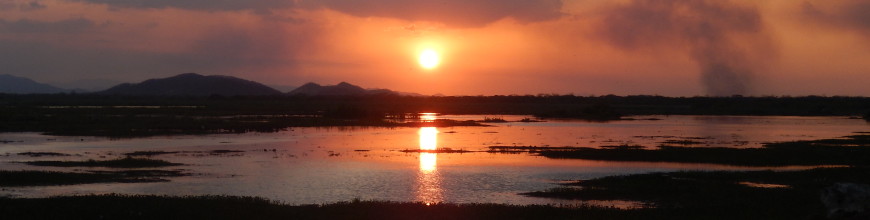
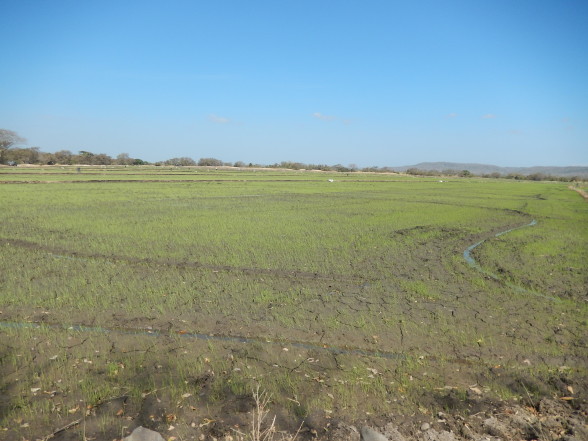
As the the waters of the marshland here in Palo Verde recedes for the remainder of the dry season it will ultimately force insects to leave for the season, crocodiles to retreat to the Tempisque river, and signal the end of our stay at the station. We have faced some of the hardest challenges so far here, I am not shy so say I have been reconsidering all the time if I am truly strong-willed enough to face the challenges we are presented as biologists, fragile humans, and citizens in a changing planet.
“What doesn’t kill you makes you stronger” Unless it is a research paper that was conceived and turned in a twenty-four hour period, a sobering personal statement by long-term researchers on how much harder it is to find their study animal with the passing seasons, or a dangerous animal that you know is only scared and defending itself the only way it knows how. I was told thick skin is necessary to face the rejection letters ecologists are going to receive several times over a career. But the truth is I am a fragile creature, and all creatures are fragile.
Our first Independent Project was, in my opinion, a success and a big sigh of relief. The time from me wanting to study human development’s impact on protected areas and Bridgett Gross of The College of Wooster(Ohio) wanting to learn more about ants and acacia trees to presenting a research proposal with a hypothesis and complex methods was a time period of about 15 hours. Additionally, we had a four day time period to collect data, and the temperature was at 102F at 9am every morning. I was really stressed out for a day because I did not understand how to use our statistical analysis program, until I calmed down and realized my professor didn’t know it well either and worked with us through using it. After we analyzed our data and answered our ecological questions we had at the beginning of the week my partner and I had about another 24-30 hour period to write up our individual research papers and complete, practice, revise, and present our Powerpoint presentation. I now have two biological/scientifically formatted papers under my belt!
I do not really remember what we even did here in terms of lectures and field trips, but we have two midterms on these things in two days. I was supposed to be studying plant and insect taxonomy as well, but I am only really an expert on mutualistic plants and ants.
Today is our first free day in two weeks, but no one is getting any rest today. By next week we will be back in San Pedro, and I will be with my Home-stay family. They are Cecilia and Carlos Ramirez-Gutierrez, a homemaker and sales agent. My classmates will be with separate families, from physical therapists to bakers. I look forward to a break from biology.
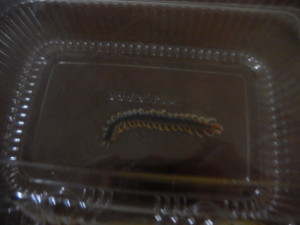 Centipedes are of the class chilopodia. The are arthropods and common throughout the world. All Centipedes have front legs that have evolved to inject venom into their prey, which ranges from small insects and spiders to small mammals such as bats and rodents. Our professor is a sensible person on most dangerous creatures, yet he does not mess around with these things. He kills them on the spot.
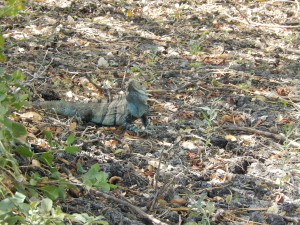 This things basically live with us. Rather than in our bed rooms, they live under the sidewalk or under the room shingles. Today I saw one climbing a support beam to get up to the roof!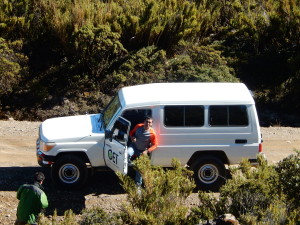
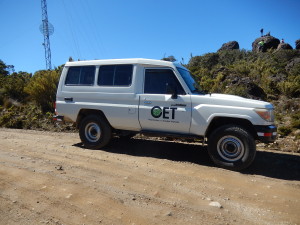 Our Fabulous Toyota Landcruiser has been known to fit 15 people in the back. Our driver has affectionately named it “Marta”. We are usually ten. The upper right backdrop features some of us on a rock, viewing the pacific.