This weekend was a participation in a genuine long term study of Shade vs. Sun Coffee plantations here in Costa Rica. For anyone who enjoys coffee and low prices, this is an important study. First I will begin by telling you all that I visited a coffee plantation for the first time ever and learned the secret ways of harvesting, drying and roasting the coffee bean. La finca de Don Roberto is a modest subsistence farm with sugar cane, cerro, pollo, and yucca. Coffee plants dominate the 3 hectares of his 6.5 hectare property. Coming onto the property is like stepping into the past. The front porch is the dining room and gourds and rusted farm tools hang from the ceiling. We receive a warm welcome from a man who grew into his farm. He was warm and welcoming to the gringo students and even lets researchers stay on his farm to research. Our favorite piece was the mutt that picked bananas for itself and loved getting its ear scratched!
Coffee is naturally an understory plant and Don Roberto grows his plants under banana trees and natural forest. He has successfully created a terrace system and irrigated the land to minimize erosion. The soil was dark in color, indicating its high nutrient value. It was a peaceful place, and old-time Latin music was playing nearby and children from the community, maybe grandchildren, played by the house and did chores. He is content to spend his life restoring fragments of natural forest on his land and enjoying seeing his grandchildren become interested in the outdoors; he finds modern technologies have created a barrier between people and the land. I would like to visit him again.
Our project was to help a researcher from El Universidad de Costa Rica count and identify species of ants and coffee boring beetles. We spent our first day at Don Roberto’s, a shade plantation, and the next day at a commercial sized sun plantation.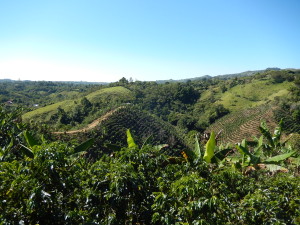 We started our survey by putting out tuna bait for carnivorous ant species and collected the ants that appeared after forty minutes. My survey site was at the far end of the plantation. I was required to crawl prone through a patch of coffee plants, placing baits along the way. Additionally, we collected 250 fallen coffee fruits to dissect later for evidence of beetle investation. When I came out of the tunnel I was greeted to a vista of the entire plantation, it was a moment of peace and reflection, because every piece of land and pasture was once old growth forest with wet soil and vibrant life. After collection we returned to el labortorio at la cruces and worked at identifying the genus of ant and sifting through our coffee beans and fruits. I am proud to be apart of real work that determines the livelihood of farmers here, and I will be involved in more projects later on in the semester.